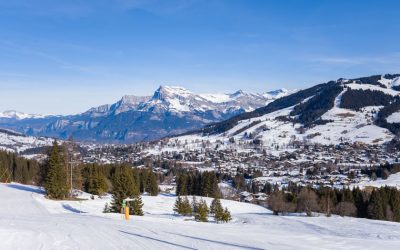
Look, we’ve all been there. You shell out three grand for a “dream” week in March, only to find yourself water-skiing through brown slush by noon while the locals give you that pitiful “should’ve been here in January” look.
It’s depressing. But – and this is a big but – there’s a secret logic to the French Alps that most travel agents won’t tell you because they just want to fill beds in Megève.
If you aren’t hunting the Elevation Edge, you’re basically gambling with your ski vacation. It’s about that 2,300m line. It’s a magic number, really.
The Altitude Threshold: Defining “Snow-Sure”
(whatever that means anymore)
On top of the Aiguille Rouge above Les Arcs the sun can be so bright you’d think your retinas were actually sizzling. But the snow? It feels like mid-winter. That’s the “Snow-Sure” nexus. It’s not just a buzzword; it’s like… topographical armor.
The 2,300m Rule: Glacier Access is the Ultimate Insurance Policy
Modern snow science – and honestly, just common sense – says the survival line has moved. If your resort peaks at 2,000m, you’re cooked.
Literally. You need glacier access.
These giant chunks of ice, like the Grande Motte, they act as a giant thermal battery. They keep the ground cold. Even when the air feels like a lukewarm bath, the glacier is down there, humming, keeping things frozen. It’s a “permafrost pocket.”
Without it? You’re just skiing on a prayer.
North-Facing Slopes vs. Solar Exposure: Tarentaise Micro-Climates
Elevation is great, sure, but the aspect is the real hero here. If you’re on a south-facing slope (the ‘adret‘, as the French say) in the Tarentaise Valley during March… well, good luck. You’ll be skiing in a pond by 2 PM.
North-facing slopes (the ‘ubac‘) get like 40% less sun. It’s the “cold-core” effect. You want a resort that’s shaped like a messy bowl—shadows everywhere. That’s where the good stuff hides.
It’s like a portfolio, you know? You move your assets (your skis) to where the sun isn’t looking.
The Elite Shortlist: Destinations with Guaranteed Coverage
(until May, basically)
Not every high-altitude spot is built the same. Some are just better. Geographically superior. Almost arrogant about it.
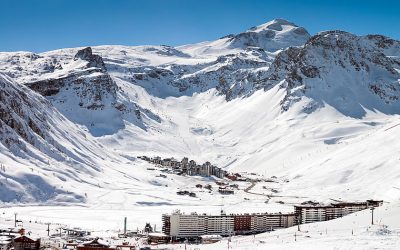
Val Thorens: The Highest Town and Its Cold-Trap

VT is the undisputed king. It sits at 2,300m—that’s the base, people. The town itself is a freezer. I’ve seen it dump 20cm of fresh powder in late April when people were wearing shorts in Annecy. It’s a natural horseshoe. It traps the cold air and just… holds it. Like a jealous ex.
If you want a “village run” that isn’t a muddy mess, this is the only logical choice.
Tignes & Val d’Isère: The Espace Killy Machine

They call it the Espace Killy, and honestly, the snowmaking there is borderline terrifying. They don’t just “make snow.” They build an ice-base in December that could survive a nuclear winter.
Sixty per cent of the terrain is above 2,500m. It’s integrated infrastructure on a scale that makes other resorts look like backyard hills.
Les Deux Alpes: The 3,600m Glacier Advantage
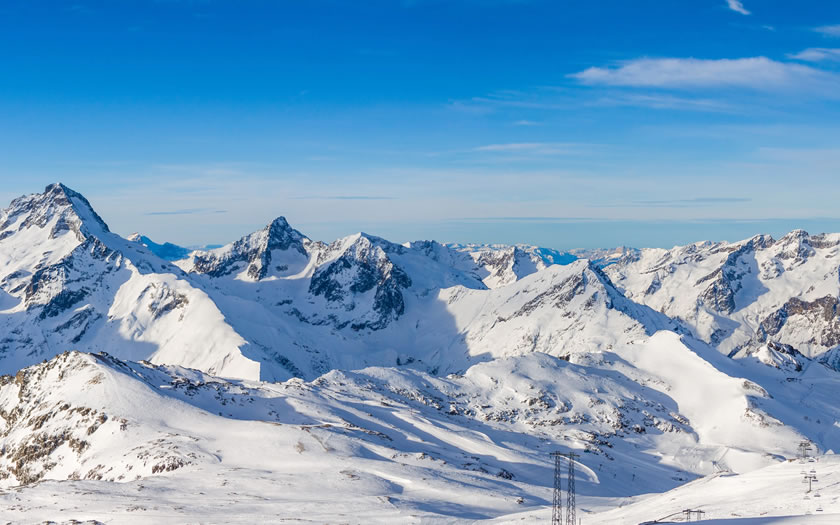
Most mountains are pyramids. Les Deux Alpes is an upside-down cake. The wide, flat, perfect-condition slopes are at the top – 3,600m up.
It’s weird, but it works.
Even if you’re a beginner, you aren’t stuck on the slushy nursery slopes at the bottom. You’re up in the clouds where the air is thin and the snow is crisp. It’s a literal high.
Beyond the Piste: Predicting Spring Snow (Powder vs. Corn)
Late-season skiing is about timing. It’s a dance with the Diurnal Cycle. (That’s a fancy way of saying it freezes at night and melts during the day).
The Diurnal Cycle: Timetabling Your Day
You have to be a bit of a clock-watcher.
1. 09:00 – 10:30 (Ice Age): Everything is “bulletproof.” Vibrates your teeth right out of your head. Stay on the groomers.
2. 10:30 – 13:00 (The Corn Window): This is it. The holy grail. “Corn Snow.” It’s like velvet. It’s better than powder? Maybe. Don’t @ me. It’s fast, grippy, and makes you feel like an Olympic hero.
3. 14:00 onwards (The Slush): Time for a long lunch. Or head back to the 3,000m peaks. Or just give up and drink Aperol.
Risk Mitigation: Ski-In/Ski-Out or Bust
Nothing kills the vibe like the “walk of shame.” Carrying skis through a muddy parking lot in 15-degree heat? No thanks.
- Stay High: Look for places like Arc 1950 or Plagne 2100. Satellites.
- Check the “Home Trail”: If the return run is north-facing, you’re golden. If it’s south… well, I hope you like hiking in plastic boots. It’s the “Elevation Edge” logic. Don’t fight geography. You’ll lose.
Spring Skiing FAQ: The Reality Check
Q: Is the end of March too late for France?
A: No, but don’t go to Morzine. Go to Val T. March is actually peak base-depth month. The ground is literally at its thickest.
Q: Best time to actually ski?
A: 11 AM. Precisely. When the sun has kissed the ice just enough to make it “corn,” but before it turns into a slurpee.
Q: Won’t I freeze at 3,000m?
A: Not in March. You’ll probably get the worst sunburn of your life. Wear SPF 50. Seriously. The UV up there is no joke – it bounces off the snow and hits you from underneath.